Hospital Packing List for Back Surgery: What You Will or Won’t Need
So this was the week! I had my back surgery last Tuesday and I’m home now. Thanks to a lot of wonderful suggestions I received in a Facebook group for laminectomy or fusion surgery, I was very prepared for what I’d need during my hospital stay, so scroll down to see a printable hospital packing list a back surgery patient will need, and some things you may think you’ll want, but won’t use.
I got really lucky with my surgery. It was going to be at least a laminectomy, a couple of other procedures, and quite possibly a fusion. Once they got into my back though, they learned the fusion wasn’t necessary at this time. I woke up really happy about that, because while the restrictions and limitations are pretty much the same, the restrictions and recovery period is shorter. That gets me back in my groove in half the time!
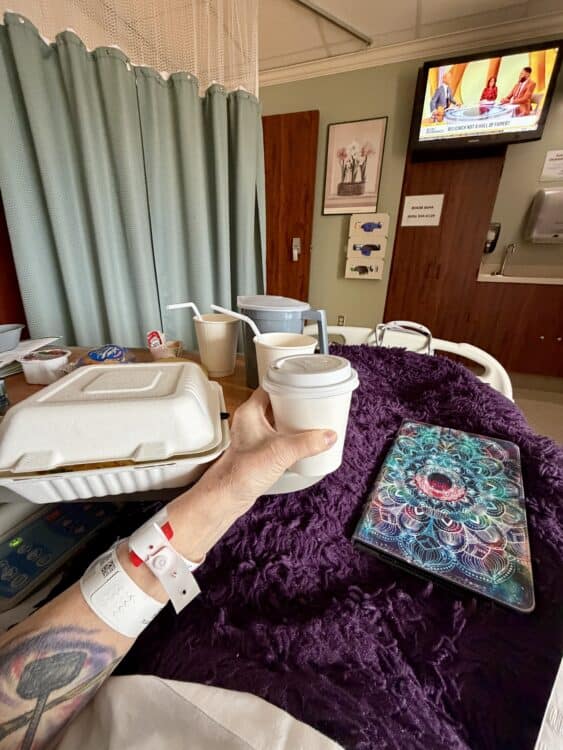
Pain is pretty bad without pain meds, but I don’t like the feeling most pain meds cause, so I’m taking them minimally. I have to take anti-nausea meds about 35 minutes before I take the pain pill or bad things will happen. (The afternoon of the surgery, all I did was throw up, snooze, on repeat, all day. Miserable.)
Hospital Packing List for Back Surgery
- Pillow
- Blanket
- Hair brush or comb (and scrunchy, if you have long hair)
- Cell phone
- Ear buds or headphones with Bluetooth capability
- Tablet (if you’re a reader or don’t want to watch TV or will have a longer hospital stay)
- Charging cords, all 10′ long (brightly colored if possible)
- Throat drops
- Hard candy
- Hard case for any glasses you may need
- Clothes for ride home: loose waistband on pants, bra with no underwire, baggy shirt, etc.
- Firm body pillow for the ride home
- Slip-on shoes with grippy soles
- Chapstick
I was lucky enough to have a private room for my surgery, but the list is really no different. Hospitals can be loud, especially if you’re at a major trauma hospital like I was at, where speakers go off frequently to announce life flights or emergency patients were coming in. (It’s a measure of comfort that you’re in one of the best hospitals around.) Making your space as comfortable as possible, since your space is pretty much reduced to the size of your bed and rolling table, is critical to your mental health. You will be in pain and medicated and sleepy, but when you’re awake, knowing you’re meeting your own immediate needs can help you feel less worried or isolated.
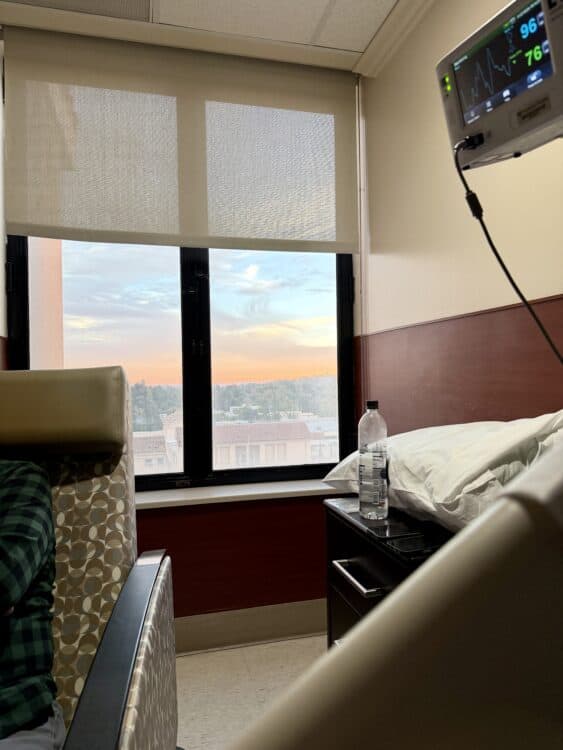
My first day, the day of my back surgery, I was on medications via my IV line, and oral tabs..which didn’t stay where they were supposed to. I was cranky and anxious, and having my own blanket and pillow made all the difference. I took a heavy blanket, because rooms are always cold and hospital blankets are notoriously thin. The blanket felt almost like a weighted blanket, and it was my favorite color, purple, which matched the silk purple pillowcase on my own home pillow. My pillow is what I call an envelope: a flat, thin rectangle. It’s perfect. If I have to use a bulky pillow, I won’t sleep, and sleep is tantamount to recovery. If you’re not worried about it, you can skip it, but you’re allowed to bring one to regular surgical wards. (I can’t speak for ICU.)
I never used the earbuds, I had packed them not realizing I’d have a private room, but I almost put on a meditational app around midnight to fall asleep with.
Having a super-long charging cord was the only way I could have charged my devices and had it accessible without having to ask for help in retrieving it. I chose a brightly colored cord, and matching charging block with multiple ports. It’s easier to distinguish from medical equipment and other cords at a glance even across the room, and you’re less likely to forget it if it doesn’t blend in with all the white and grey.
Some people wear the same clothes home that they came in, but the hospital packs up our things in a bag as we’re getting prepped in the pre-op area, and I told my husband to take them home. The weather when I arrived at 5am on Tuesday was vastly different from when I left, as in cold vs hot. A long sleeved hoodie wasn’t going to work at 1pm when it was in the high 70s. Plan ahead, with a waistband and/or under clothes that won’t hit on your incision. You’ll likely have some serious bandages that will also add girth, so go for baggy if you can.
I’d gotten a very long list of suggested items to bring to the hospital , but some of them were entirely unnecessary. The one that stood out to the most as unnecessary, and actually a potential problem, was an essential oil infuser. Don’t get me wrong — I use these at home all the time, but infusing an odor into a potentially shared space could be entirely rude. I also wonder who would be responsible for filling it up. Comfort is important, but not at the behest of someone else’s time or sacred space either.
Other ones I’d been suggested, but I totally didn’t need nor want them:
- Robe: most hospital gowns now cover your backside, and if not, you can ask your nurse for one put on backwards so you’ll be covered without adding more weight to your body, which is more for your newly fixed back to carry. (And it gets in the way of IV tubes, attached probes, catheter, etc.)
- Yoga mat: why, I mean, why…
- Personal clothes or pajamas: in theory, it sounds nice, but you’ll need help changing, and you’ll potentially get blood or worse on them. Nurses are busy; they don’t need more things to do that spread their time even more thin, and you’re likely to not even care about wearing them.
- Makeup: everyone that matters will already have seen you without makeup and looking pretty rank, so get over the vanity and choose comfort. Even holding up your arms will be exhausting. All I used was my silk scrunchy to keep my hair out of my face when I vomited. Seriously, you’ll be needing help at home, and likely, someone will be helping you shower. If you stop worrying now about how you look, you will be happier later.
- Deodorant: thought for sure I’d need it. Never touched it. Nurses will provide you with wipes when/if needed.
- Belt to lift your legs up: I get this one, in theory, but IF you are up, you won’t be alone…unless you go rogue, and in that case, wrangling a belt around your felt is going to have you more leaning and twisting than you should be. Ask for help, don’t risk it.
- Snacks: I packed those hard candies and throat drops. Never opened them. Used them at home though, and had I stayed longer, I would have needed them. The soreness from the intubation (used in general anesthesia) had my throat sore for a couple of days.
- White noise machine: another thing that makes sense, but personal space may be limited, particularly in a shared room, and your roommate may not like it. My recommendation? Use a music or meditational app (Spotify, FitOn, etc.) and your earbuds instead.
The only thing I wish I’d taken but didn’t is a weird item you likely won’t need — a pair of nail clippers. I had a nail break off very sharply and it would scratch me if I itched something. The hospital didn’t have any available, so I had to deal with it until I went home as my husband was already on his way.
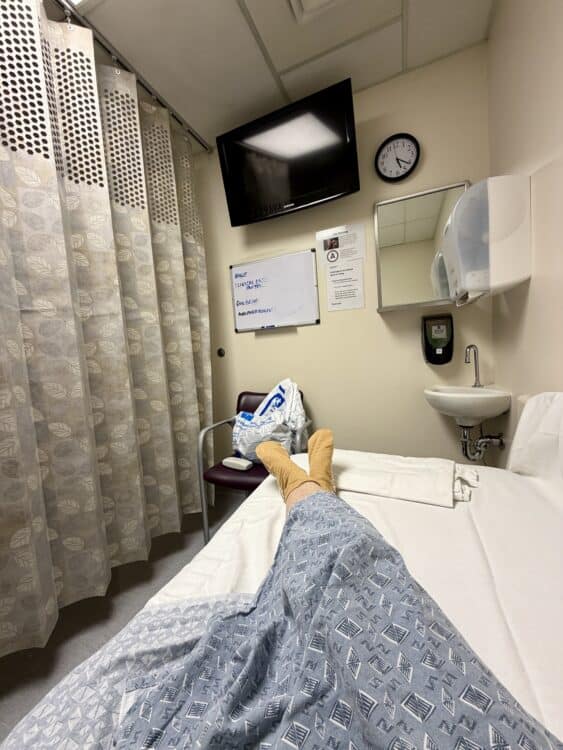
The process for check-in, for me, was to head to admission at 530am, where I was sent up to pre-op within minutes. I stayed there for approximately two hours, where I was gowned up, had blood drawn, various doctors came in to talk with me, and then my husband was sent to a special waiting room with all my things. The hospital could have kept my book and glasses, but my husband planned on meeting me in my room as soon as I was released from recovery; he actually beat me up there, but in the 5-6 hours in between, he’d gone home and dropped off my bags, bringing back just my glasses and the book, and of course, my phone.
In our car, he’d kept my pillow, blanket, and hospital bag. My bag ended up sitting in the chair next to my bed, so I could easily grab things without twisting. Having just one bag, the pillow, and the blanket made it easier to load me and everything into the car for our trip home. (You may also have flowers or items people brought you while you were admitted, but I had asked for no visitors due to my nausea situation. In fact, I really recommend you be honest with your people in advance. Guests can be a mood boost when you need it, but you will also need sleep, and if you get a quiet chance, take it.
My hospital packing list for back surgery is on the minimal side. I just knew, from my very few prior hospital stays, that less is more. Most hospitals have a decent gift shop, and have your person/s be on standby IF you should need something you don’t have, but hospitals are pretty well equipped to meet your needs.
If you’re having back surgery, buy your at-home gear in advance. The only thing we didn’t have was my back brace, and I suspect it will be expensive, since the brand had it personally delivered and fitted there in my hospital room. Ask in advance, if you’re not confident your insurance will cover it 100%, if you can possibly purchase it in advance on your own.
Whatever you do, use your time in the hospital to rest, get your pain management under control, and learn how to handle your nausea. Ask for questions on what to look for, and if possible, have someone with you to remember everything. I forgot to ask about what to expect for my swelling, which is still significant a week later, but is getting a little better every day. Take care of yourself, and I hope your recovery goes smoothly! (And don’t forget to take advantage of my printable hospital packing list above!)